Seagulls are part of everyday life in many North East towns. Their calls, roofline movements and bold behaviour are familiar near the coast, along rivers and around busy urban spaces. A gull landing on a roof does not automatically mean there is a problem.
The concern starts when the same building keeps attracting activity. Noise gets louder, droppings build up, nesting material appears, and birds become more defensive around one part of the roof, ledge or gutter.
This article by Clear Pest Control explains why gulls use roofs and buildings across the North East, how nesting season changes the risk, what the law says, and when repeated activity around a property needs proper advice.
Why Do Gulls Use Roofs and Buildings?

Roofs give gulls height, open views and a safer place away from ground-level disturbance. Flat roofs, ledges, chimneys, gutters, signs and sheltered corners can all become attractive when birds are looking for somewhere to rest, watch, feed nearby or nest.
The RSPB guide on gulls and people explains that gull activity around buildings often becomes more noticeable during the breeding season because adult birds are protecting nesting sites. That is why calling, swooping and defensive behaviour can increase around the same roof area, especially where easy food and busy human spaces are close by.
The problem usually starts when a roof stops being a resting spot and becomes part of a regular gull routine. That routine might include daily landing, calling, fouling, gathering nesting material or returning to the same high point.
Gulls, Seagulls and the Species Confusion
There is no single bird species officially called a seagull. People use the word because it is familiar, and fair enough, everyone knows what it means. In bird terms, though, “gulls” is the better general name for the group.
That matters because gulls vs seagulls is not only a wording issue. Different gull species can behave differently, nest in different places and carry different conservation concerns. A bird nesting on a flat roof in Sunderland, a kittiwake on the Tyne and a large gull circling above a retail park should not all be treated as the same problem.
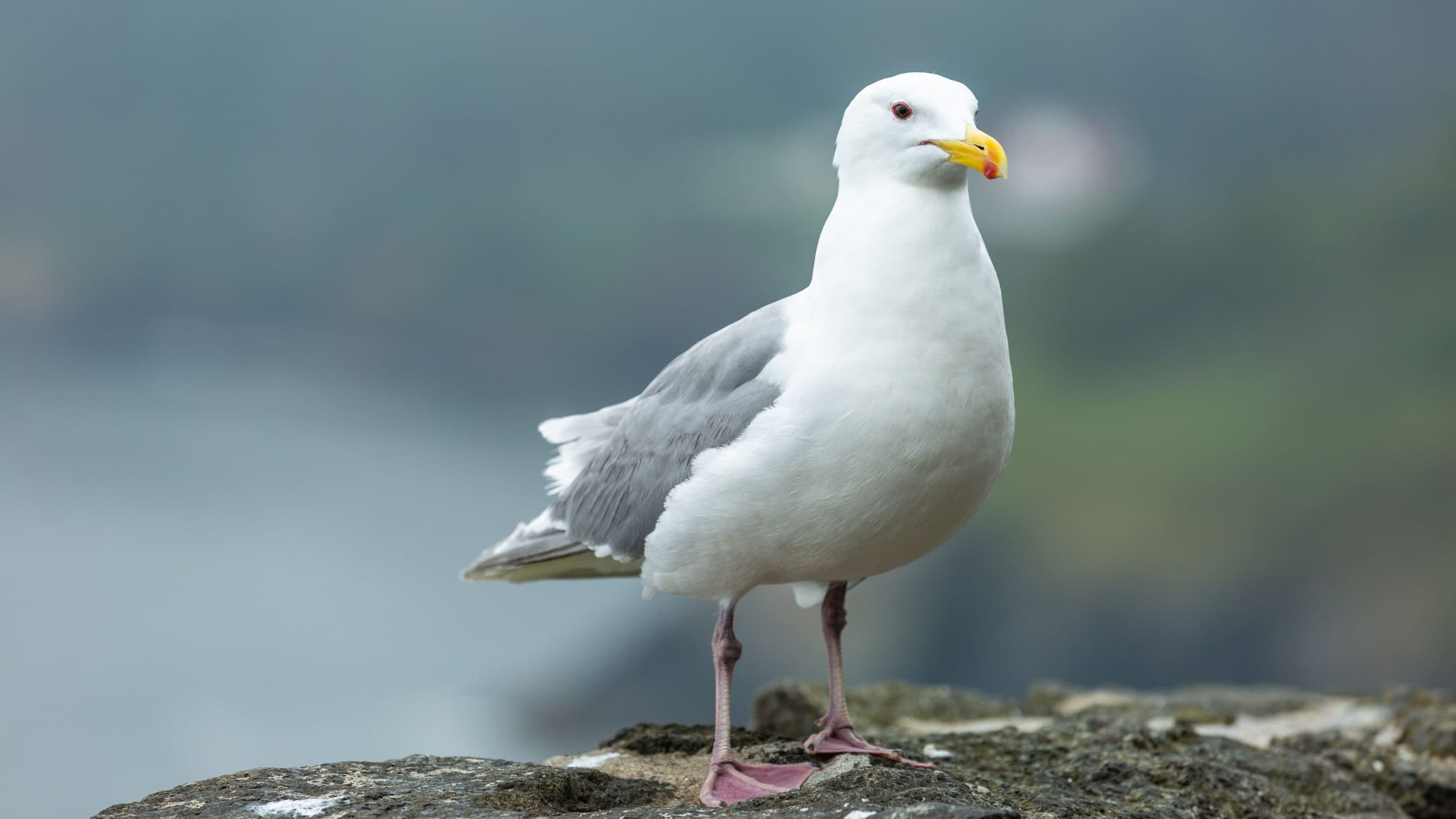
There are several types of gulls in the UK. According to BTO BirdFacts, Herring gulls are large, familiar birds often linked with roof issues. Lesser black-backed gulls have a dark grey back and yellow legs, and can breed on flat roofs of city-centre buildings and industrial units. Kittiwakes are also gulls, but their North East story is different because of the well-known Tyne colonies.
Herring Gulls and Roof-Nesting Behaviour
Herring gulls are one of the species most often linked with urban roof problems. They are large, vocal birds, and when nesting is involved, their behaviour can become much harder to ignore.
The BTO herring gull guide describes the species as a familiar gull with a pearly-grey back and pink legs. It also explains that herring gulls feed mainly on marine animals but are opportunists, meaning they can use a wide range of food and may gather around refuse where easy food is available.
That opportunistic behaviour helps explain why roofs near bins, food businesses, takeaways, yards or outdoor eating areas can become more active. The roof may be the landing point. The food source may be what keeps the birds close.
When do herring gulls nest? Activity often builds from spring as birds claim sites, form pairs, lay eggs and raise chicks. The timing can vary, but spring and summer are usually when roof problems become more obvious.
Herring gulls can become a real building issue because nesting changes the way they behave around roofs, ledges and people below. A bird resting on a roof is one thing. A bird defending a nest above a walkway is a very different conversation.
Food Sources That Keep Gulls Coming Back

What do gulls eat? The answer depends on the species and setting, but many gulls are flexible feeders. They may feed naturally on marine life, invertebrates and other prey, while also taking advantage of scraps, refuse and food waste around people.
Food often explains why gulls stay close to people, even when the nesting or roosting happens above ground level. The roof may be where the problem is seen, but the cause may be at bins, yards or nearby waste points. The same food waste and overflowing bins can also attract rats, making good waste management important for reducing a range of pest problems.
For commercial sites, the food source may not be on the roof at all. It may be a bin store, takeaway area, yard, loading bay or outdoor seating area nearby. Gulls learn quickly when food is easy to reach.
Gulls Eggs, Chicks and Nesting Season
Gulls eggs change the situation quickly. Once eggs or chicks are involved, the issue is no longer just noise or droppings. There may be legal, welfare and safety concerns too.
For herring gulls, BTO data gives a typical clutch size of three eggs, with an observed range of two to four. It also gives a typical incubation period of 28 to 30 days, and a fledging period of around 35 to 40 days.
That helps explain why a roof problem can last longer than people expect. A pair settling on a roof, eggs in a nest and chicks moving around roof edges are not the same stage of the problem.
When do gulls start nesting? Many gulls begin nesting activity in spring, with signs becoming more obvious as pairs settle, build nests and defend the area.
Once eggs or chicks are involved, the roof problem becomes more sensitive and more legally restricted. This is exactly why poking around, moving material or trying to clear a nest yourself can create more trouble than it solves.
Are Gulls Protected by Law?
Are gulls protected? Yes. Wild birds, nests and eggs are protected under UK law, and any action around control, disturbance, eggs or nests depends on species, timing, purpose, method and licence conditions.
GOV.UK’s bird licence collection includes licences for situations involving killing, taking or disturbing wild birds, and it tells users to read advice notices and consider whether their objective can be achieved without needing a licence before using one.
Are herring gulls protected? Yes, herring gulls are protected as wild birds. Their nests and eggs should not be treated as a casual roof-cleaning problem.
GOV.UK wildlife licensing guidance also says a licence may be needed if work will disturb or remove wildlife or damage habitats. That is why roof works, nest disturbance and control decisions need proper checking where gulls may be active.
Gulls in Flight and Building Identification Clues

Gulls in flight identification UK searches often come from people trying to work out what is circling, landing or calling above a property. Size, wing shape, back colour, leg colour, bill markings and call can all help, but gull identification is not always simple.
Young gulls can look very different from adults. Some species also look similar at a distance, especially when seen from below or against a bright sky. That is why a quick look from the ground is not always enough.
Identification matters, but the building pattern matters too. Where the birds land, how often they return, whether there is nesting material, and whether droppings or defensive behaviour are appearing all help build the picture.
For more guidance on identifying pest activity and understanding seasonal wildlife behaviour, visit the Clear Pest Control Blog.
Urban Gulls Across the North East
The North East has a strong coastal identity, but gull activity is not limited to beaches or harbour walls. People may think of sea gulls UK as purely coastal birds, yet urban gull activity can also appear around roofs, high ledges, riverside buildings, food businesses and flat commercial units.
The Tyne kittiwake colonies are a useful local reminder that gulls are not all the same. The colonies along the River Tyne are known as the furthest inland breeding colonies of kittiwake in the world, but that does not mean every gull on a North East roof is a kittiwake.
Gull Problems Across Tyne & Wear
Tyne & Wear has a mix of coastal towns, riverside buildings, older rooflines, high streets, takeaways, flat commercial roofs and busy public spaces. That combination can make gull activity more visible than it would be in a quieter inland setting.
The main issue is whether they are using a building repeatedly for landing, nesting, feeding access or shelter. Once droppings, nesting material or defensive behaviour appear in the same place, the problem becomes more practical.
Newcastle upon Tyne
Newcastle has riverside buildings, hospitality areas, offices, flats, roof terraces and busy pedestrian routes. That gives gulls high points and possible food sources nearby.
Gull control Newcastle upon Tyne may become relevant where repeated roof activity, droppings, nesting material or defensive behaviour begins affecting a home, business or shared access point.
This is about knowing when a roof or frontage is being used often enough to create risk, mess or disruption.
Sunderland
Sunderland has a coastal and urban mix, so gull activity can be more noticeable around roofs, waste areas, homes, retail units and commercial sites.
Bird control for gulls Sunderland should start by checking what is attracting the birds. It may be food waste, a roof nesting point, a flat roof edge or repeated use of a ledge.
Gateshead
Gateshead has riverside buildings, commercial spaces, high ledges, older structures and busy public areas. Around the Tyne, species identification also matters because gull-family birds may not all be the same.
Bird control for gulls Gateshead can be useful when building use is repeated, especially around ledges, roofs, signs, yards or food-handling areas.
South Tyneside
South Tyneside has coastal towns, homes, business premises, older rooflines and areas where gulls may already be part of daily life. That does not mean roof nesting or fouling should be ignored.
Gulls removal South Tyneside should never be treated as a simple nest-clearance job if eggs, chicks or active nesting behaviour may be present.
North Tyneside
North Tyneside has seafront areas, high streets, residential rooflines, commercial units and food-led spaces where gull activity may build up.
Pest control North Tyneside may be needed where gull activity is part of a wider bird issue affecting roofs, gutters, entrances or commercial spaces.
The Problems Gulls Cause Around Buildings

Repeated use of a roof or building can leave droppings, nesting material, blocked gutters, noise, smells and access problems behind.
Droppings can build up on entrances, windows, paths, signs, vehicles, roof surfaces and outdoor seating areas. For businesses, that can affect staff, customers and first impressions very quickly.
Nesting material can block gutters, valleys and roof drainage. That can create water problems, especially when nobody notices until rain starts backing up where it should not. Roof voids, eaves and sheltered gutters can also attract wasps, particularly during the warmer months when queens are establishing new nests.
Defensive behaviour can also become a concern during nesting season. A gull protecting chicks near a roof edge or access point may swoop, call or make people avoid the area.
Check the Pattern Before Acting
Before acting, check what is actually happening. Gulls are protected, and roof activity can mean different things depending on the season, species and site.
Ask these questions as you check:
- Are birds returning to the same roof, ledge or chimney?
- Is there nesting material in gutters, valleys or flat roof areas?
- Are droppings building up near entrances, yards, paths or vehicles?
- Are gulls becoming defensive near one part of the roof?
- Could eggs or chicks be present?
- Is food waste attracting birds nearby?
- Is the issue affecting staff, customers, tenants or neighbours?
- Has the problem returned after cleaning or blocking obvious access?
If several of these signs are present, the issue is more likely to be repeated building use rather than one gull passing through. At that point, it is better to get the situation checked before nests, eggs, chicks, blocked gutters or defensive behaviour make the problem harder to deal with safely.
When to Get Advice About Gulls on Your Roof
If gulls are repeatedly returning to the same roof, ledge, chimney, gutter or business frontage, it is worth getting advice before trying to deal with the issue yourself. This is especially important if there may be nesting material, eggs, chicks, defensive birds, blocked gutters or droppings near entrances and public areas.
Clear Pest Control can help assess repeated gull activity around North East homes and businesses, explain what the signs may mean, and advise on the most sensible next step. This keeps the response practical, safe and legally aware rather than rushed.
Learn more about About Clear Pest Control, our approach to responsible pest management, and how we support homes and businesses across the North East.
If gull activity is affecting access, hygiene, roof maintenance or day-to-day use of the property, contact us to discuss the situation or call, 0191 829 9920, for practical advice.
FAQs
Are gulls protected?
Yes. Wild birds, nests and eggs are protected under UK law. Any action depends on species, timing, purpose, method and licence conditions.
Are herring gulls protected?
Yes. Herring gulls are protected as wild birds, and action involving nests, eggs or birds must follow the law and any required licence conditions.
When do herring gulls nest?
Herring gull nesting activity often builds from spring, although timing can vary. Roof activity usually becomes more noticeable as birds claim sites, lay eggs and raise chicks.
When do gulls start nesting?
Many gulls start nesting in spring. Activity may increase as pairs return to roof areas, build nests and begin raising young.
What do gulls eat?
Gulls are opportunistic feeders. Depending on species and setting, they may eat marine food, invertebrates, scraps, refuse and other easy food sources around people.
How long do herring gulls live?
Herring gulls can be long-lived birds. BTO data gives a typical life expectancy of 12 years for a bird reaching breeding age, with breeding typically starting at around 4 years.
Sources
[1] RSPB — Gulls and peoplehttps://www.rspb.org.uk/birds-and-wildlife/advice/gulls-and-people/
[2] BTO BirdFacts — Herring Gullhttps://www.bto.org/learn/about-birds/birdfacts/herring-gull
[3] BTO BirdFacts — Lesser Black-backed Gullhttps://www.bto.org/learn/about-birds/birdfacts/lesser-black-backed-gull
[4] Tyne Kittiwakeshttps://www.tynekittiwakes.org.uk/
[5] GOV.UK — Bird licenceshttps://www.gov.uk/government/collections/bird-licences
[6] GOV.UK — Wildlife licences: when you need to applyhttps://www.gov.uk/guidance/wildlife-licences
[7] Wildlife and Countryside Act 1981, Section 1https://www.legislation.gov.uk/ukpga/1981/69/section/1