The moth flying out of your wardrobe is not the one that made the hole in your jumper.
The damage starts earlier, while the insects are still larvae and hidden among fibres. The Natural History Museum says clothes moth eggs can hatch in as little as 4–10 days in summer, while the larval stage can last anywhere from one month to two years, depending on food and conditions.
That is why a moth infestation can seem to appear suddenly. The adult insect may be new. The feeding damage underneath a wardrobe, inside folded clothing or along an untouched carpet edge may have been developing for much longer.
This article by Clear Pest Control explains what causes these infestations, what the larvae look like, which parts of the home are most vulnerable and how to trace the source before more fabric is damaged.
What Actually Causes a Moth Infestation?

A moth infestation begins when an adult female finds a suitable material on which to lay eggs.
For textile-feeding species, that usually means animal-based fibres containing keratin. Wool, cashmere, fur, feathers and hair can all provide food for developing larvae. BPCA also notes that clothing carrying perspiration or food stains can be particularly attractive. [2]
The adult insect does not eat the hole. Once the eggs hatch, the larvae begin feeding where they were laid. If the area is dark, quiet and rarely disturbed, they may remain there for weeks or months before anyone notices the damage.
A successful infestation usually has three things working together: suitable fibres, somewhere protected to develop and enough time without disturbance.
Remove only the adults and those conditions can remain unchanged.
Clothes Moth Larvae Cause the Damage
Clothes moth larvae are the stage worth finding because they are responsible for the feeding damage to textiles.
The adults are mainly concerned with mating and laying eggs. The larvae that hatch afterwards feed on suitable fibres while they grow, which is why damage can appear around clothes, carpets, rugs, upholstery and stored textiles.
What does moth larvae look like? Look for small pale, caterpillar-like insects rather than tiny flying moths. The Natural History Museum describes common clothes moth larvae as creamy or white with a hardened brown head, reaching around 13 mm when fully developed. [1]
Case-bearing clothes moth larvae can be harder to spot because they carry a small portable silk case made partly from fibres around them. That case can blend into carpet or fabric, especially along quiet edges.
A tiny caterpillar around wool or natural fibres tells you more than an adult insect sitting on the ceiling.
Why Some Parts of a Room Are More at Risk
The insect does not assess a bedroom, living room or spare room by name. It responds to what that part of the room provides.
A wool jumper that is worn, washed and moved often is very different from a wool blanket folded in a dark cupboard for a year. The same applies to carpets. The centre of a room may be vacuumed often, while the strip beneath a heavy wardrobe can remain untouched for months.
English Heritage identifies dark, undisturbed areas beneath furniture, inside folds and around upholstery a common places for this type of activity. [3]
That gives a better rule than simply saying one particular room is the problem.
The highest-risk part of the room is often the part nobody normally reaches.
Bedrooms and Wardrobes
Bedrooms contain many of the materials the larvae can feed on, but the wardrobe itself is not automatically the problem.
Risk rises when natural-fibre clothing remains stored for long periods. Wool jumpers, cashmere, scarves, coats and other animal-based fabrics are especially relevant. Garments carrying body oils, perspiration or old food marks may give larvae even more reason to stay.
Wardrobe floors, folds of clothing and the spaces behind stored boxes are easy to overlook.
These less obvious hiding places are part of what our pest control team considers when assessing where activity may be developing within a property.
Moth holes in clothes may therefore be the first clue, even though the larvae are hiding elsewhere within the same storage area.
Do not stop after finding one damaged jumper. Check what was stored beside it and the surfaces beneath the clothing.
Living Rooms and Carpeted Areas

An infestation can be just as established in a living room as in a wardrobe.
Wool carpets and rugs provide large feeding areas, while upholstered furniture can contain natural fibres in places that rarely see daylight or regular cleaning. English Heritage recommends paying attention beneath furniture and around upholstery piping, creases and deep buttons. [3]
Carpet edges are especially useful to inspect. The middle of the room may be disturbed constantly, while the fibres beneath a sofa or cabinet remain protected.
Loss of carpet pile, webbing or larvae along those hidden edges can point towards a source that has little to do with the clothes upstairs.
If adults keep appearing but the same carpet edges continue showing damage, the breeding source is still there.
Spare Rooms and Storage Areas
Spare rooms can become ideal environments for an infestation precisely because very little happens in them.
A box of wool blankets, old clothes or stored textiles may go untouched for months. Curtains, carpets and upholstered furniture can also remain undisturbed, especially in rooms that are closed most of the time.
That gives eggs time to hatch and larvae time to feed.
A room does not need to look dirty or neglected. A neatly packed box can still protect larvae from light and disturbance.
This is why infestations are sometimes discovered while moving house, clearing a room or bringing seasonal clothing back into use. The disturbance did not necessarily create the infestation. It revealed it.
Lofts, Chimneys and Old Bird Nests
Not every infestation begins in a wardrobe.
English Heritage advises checking lofts, unused chimney flues and old bird nests because feathers and other animal material can provide a suitable food source for textile-feeding larvae. [4] BPCA also links some household activity with bird nests and blocked chimney flues. [2]
This matters when adults repeatedly appear upstairs but clothing and carpets show little obvious activity.
The source may be above the room rather than inside it.
A disused chimney, loft void or old nesting material can support moth development where the insects remain largely out of sight.
Where old nesting material is involved, signs of bird nesting activity around the property can also help explain how feathers and other animal material reached a loft or roof space.
What About Moths in the Kitchen?
Moths around food cupboards may be a different problem altogether.
Indian-meal moth larvae feed on stored products such as cereals, nuts and dried foods. BPCA notes that the larvae can infest packaged goods and may penetrate some forms of packaging. [2]
That is very different from clothes moth larvae feeding on wool.
If adults are repeatedly appearing around flour, cereal or dried food rather than wardrobes and carpets, inspect the food source first.
The room matters because wardrobe moths and food-cupboard moths can require completely different source investigations.
What Do Moth Eggs Look Like?
Clothes moth eggs are tiny, pale and easy to miss.
Females place them directly among suitable fibres so newly hatched larvae have immediate access to food. You are more likely to find eggs inside folds, seams or protected areas than sitting clearly on the surface of a jumper.
Trying to identify one isolated white speck is not a reliable way to confirm a moth problem.
Eggs become more meaningful when they appear alongside larvae, silk webbing, cases or fresh fibre damage.
The surrounding evidence matters more than the egg on its own.
What Do Moth Holes Look Like?
Moth holes are often irregular rather than neat circles.
They may begin as small damaged patches and develop into larger gaps as clothes moth larvae continue feeding. On carpets, the damage may show up as thinning or missing pile rather than a clean hole through the material.
English Heritage lists irregular holes, silk webbing and gritty larval waste among useful signs of clothes moth activity. [4]
A hole alone does not prove moth damage. Fabric can tear through wear, snagging or age, and other textile pests can also cause damage.
The material and location should be considered alongside the hole itself.
If you are unsure which type is responsible, our guide to carpet moths and clothes moths explains how to tell the common household types apart and where each is usually found.
How to Identify Moth Holes in Clothes
Start with the fabric.
Damage to wool, cashmere, fur and other animal-based fibres is more suspicious than a hole appearing in a purely synthetic garment. Then inspect the surrounding area.
Look inside folds and seams. Check garments stored beside the damaged item and the wardrobe floor below. Fine webbing, larvae, cases or gritty debris make clothes moth activity much more likely.
Several irregular holes affecting natural-fibre clothing stored together are more informative than one damaged T-shirt that may simply have snagged.
The pattern can also tell you whether the infestation is still active. Fresh damage appearing after clothes have been moved or cleaned suggests that larvae remain somewhere in the storage area.
Why Adult Moths Suddenly Appear
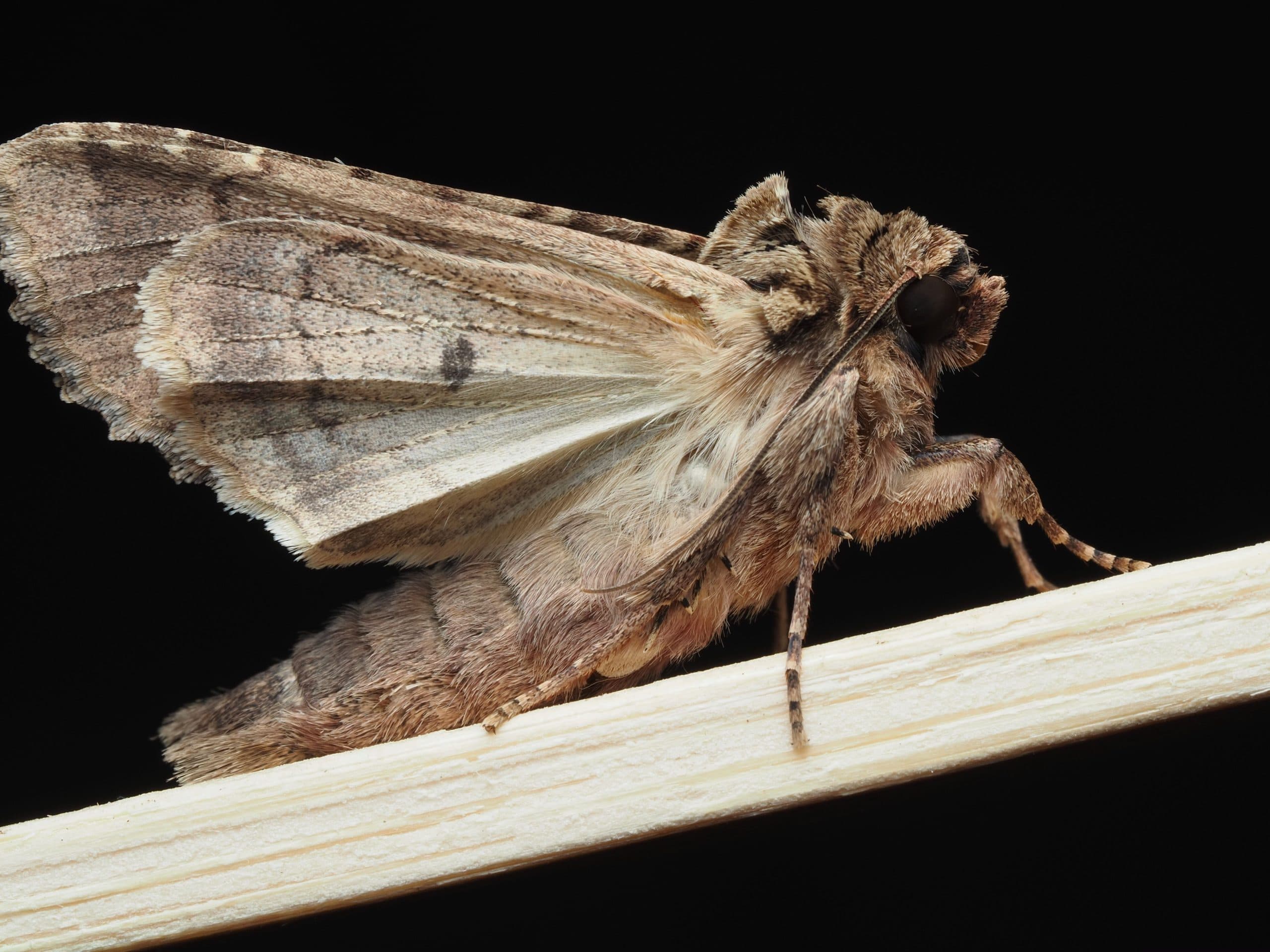
Adult moths can make an infestation look newer than it really is.
Eggs may have hatched weeks or months earlier. The larvae remain concealed while they feed and only become obvious after pupation, when several adults begin emerging around a similar time.
Warm indoor conditions can speed that development.
Why are there suddenly so many moths in Sunderland, UK? Several adults may simply have reached the visible stage of a lifecycle that was already underway inside the property. The city or a particular week did not create the problem.
Sudden adult activity can be the end of a hidden process, not the beginning of one.
When Is Moth Season in the UK?
There is a seasonal pattern, but indoor moth infestations do not follow the outdoor calendar neatly.
In cooler, unheated buildings, clothes moth development can slow considerably and adults may emerge mainly around spring. Heated homes change that. English Heritage explains that heated buildings can support two generations a year, with another emergence in autumn, while very warm environments can potentially support three generations. [4]
When is moth season UK? Warmer months may make adult activity more noticeable, but an established indoor infestation can remain active well outside summer.
What time of year do you get moths in Newcastle upon Tyne, UK? The same principle applies: indoor temperature matters as much as the season outside.
How to Trace Where the Moths Are Coming From

The room where you see an adult gives you a starting point, not necessarily the final answer.
If moths appear from the same wardrobe whenever the door opens, inspect the stored textiles. If they are concentrated near the floor, look beneath furniture and around carpet edges. If activity appears around the ceiling upstairs, consider what sits above that room.
Do not assume every moth in the property comes from one source either. A food moth in the kitchen and a clothes moth upstairs would represent two different problems.
The same principle applies when other insects are present. Finding silverfish in the home, for example, points towards a different pest problem and should not be treated as evidence of the moth source.
Why are there so many moths in my house in Gateshead, UK? Start with where the activity repeats rather than the postcode.
Find what the larvae are feeding on and the infestation begins to make much more sense.
Can You Remove the Cause Yourself?
You can begin by checking the materials and spaces most likely to support larvae.
Use this inspection order:
- Check wool, cashmere and other natural-fibre clothing for fresh damage.
- Look inside folds, seams and the bottom of wardrobes.
- Inspect carpet edges and the areas beneath heavy furniture.
- Check wool rugs and upholstered furniture.
- Look through stored blankets, coats and textiles that have not been moved recently.
- Inspect loft areas for old bird-nesting material where this can be done safely.
- Check food cupboards separately if moths are concentrated around dry goods.
- Look for larvae, webbing, cases or gritty debris rather than relying only on adult moth sightings.
- Record which rooms continue producing adults after obvious sources are checked.
Clear Pest Control pest advice starts with the same priority: find what the larvae are feeding on before deciding how far the problem has spread.
Cleaning and disturbance can make conditions less suitable, but they do not guarantee that all eggs and larvae have been found.
A large fitted carpet, inaccessible void or several affected rooms can make the true source much harder to isolate.
When Does a Moth Infestation Need Professional Attention?
Professional help becomes more useful when adults continue appearing despite cleaning and inspection, damage is spreading to several textiles or larvae are established beneath flooring or furniture that cannot be checked properly.
The same applies when activity may originate from a loft, chimney or another inaccessible space. People searching for moth pest control near me are often trying to answer whether one damaged garment is the whole problem or whether eggs and larvae are established elsewhere in the property.
Contact Clear Pest Control when the source cannot be confidently isolated or new fabric damage continues to appear.
Clear Pest Control moth control can assess the rooms, vulnerable materials and likely breeding sites before deciding what needs to be treated.
FAQs
Does Seeing One Moth Mean You Have an Infestation?
Not necessarily.
One adult moth may have entered from outside. Repeated indoor sightings alongside larvae, webbing or fabric damage are more useful signs of an established problem.
What Causes a Moth Infestation?
A moth infestation starts when eggs are laid beside a suitable food source and the larvae are able to develop.
For clothes moths, natural animal fibres such as wool, fur and feathers are particularly important. Dark, undisturbed storage areas allow the larvae to remain hidden while feeding.
What Do Moth Larvae Look Like?
Clothes moth larvae are small, pale caterpillar-like insects with brown heads.
Developed larvae may reach around 12–13 mm, while newly hatched larvae are much smaller. Case-bearing clothes moth larvae carry a protective silk case.
What Do Clothes Moth Eggs Look Like?
They are tiny and pale, usually laid directly among suitable fibres.
Their size makes them difficult to identify confidently without other evidence such as larvae, webbing or damage.
What Do Carpet Moth Eggs Look Like?
The eggs are tiny and pale and may be hidden deep among carpet fibres.
What people call carpet moths are often clothes moth species whose larvae can feed on wool carpets as well as clothing.
What Do Moth Holes Look Like?
Moth holes are often irregular and may appear as several small damaged areas rather than one neat circular hole.
On carpets, the damage can look more like thinning or missing pile.
How Can You Identify Moth Holes in Clothes?
Check whether the garment contains natural animal fibres and inspect nearby stored clothes for similar damage.
Webbing, larvae, cases or gritty debris around the same storage area make moth damage more likely.
Why Are There Moths but No Holes in My Clothes?
The source may be somewhere else.
Larvae can feed on carpets, rugs, upholstery, feathers or other animal-based material. Food moth species can also be active around stored dry goods without damaging clothing.
When Is Moth Season in the UK?
Adult clothes moth activity can be more noticeable during warmer periods, but heated properties may support development throughout the year.
Some heated buildings can support more than one generation annually.
Why Do Moths Keep Coming Back?
Adult moths may continue emerging while eggs and larvae remain hidden in untreated fibres or inaccessible areas.
Removing flying moths does not remove the stages developing elsewhere.
Which Room Is Most at Risk From Moths?
There is no single highest-risk room.
The greatest risk is usually wherever suitable natural fibres remain dark and undisturbed for long periods, whether that is a wardrobe, carpet edge, spare room, loft or upholstered item.
Sources
[1] Natural History Museum — Clothes Moths Identification Guide
[2] BPCA — Pest Advice for Controlling Moths
[3] English Heritage — Understanding Clothes Moth Infestations