A honeybee swarm can contain thousands of bees, settle in a garden for a day and then disappear into a chimney or wall cavity that nobody realised was suitable for nesting.
The National Bee Unit says the main UK swarm season usually runs from April to late July. Before finding a permanent home, the swarm may gather temporarily on a tree, fence or another outdoor surface. If they later move into a building, feral honeybee colonies commonly use chimneys and can also establish themselves inside walls.
This article by Clear Pest Control explains how bee activity starts inside walls, chimneys and roof spaces, what the flight pattern can reveal and why some nests can be left alone while others need closer assessment.
Why Do Bees Choose Walls and Chimneys?

A gap in a house can offer much the same thing as a hollow tree: shelter, protection from the weather and a clear route outside.
For honeybees, a swarm is actively looking for somewhere permanent to establish a colony. The National Bee Unit confirms that escaped swarms can settle in buildings, particularly chimneys and sometimes wall cavities. Once they move in and begin establishing comb, the situation is different from a temporary cluster hanging outside. [1]
Bumblebees have different needs. The Bumblebee Conservation Trust says queens look for sheltered nesting sites, which can include roof spaces, wall cavities, abandoned rodent holes, compost heaps and spaces under decking. [5]
The building is not attractive simply because it is warm. A usable cavity and safe access matter more.
How Bee Activity Starts Inside a Building
Honeybees and bumblebees arrive in very different ways.
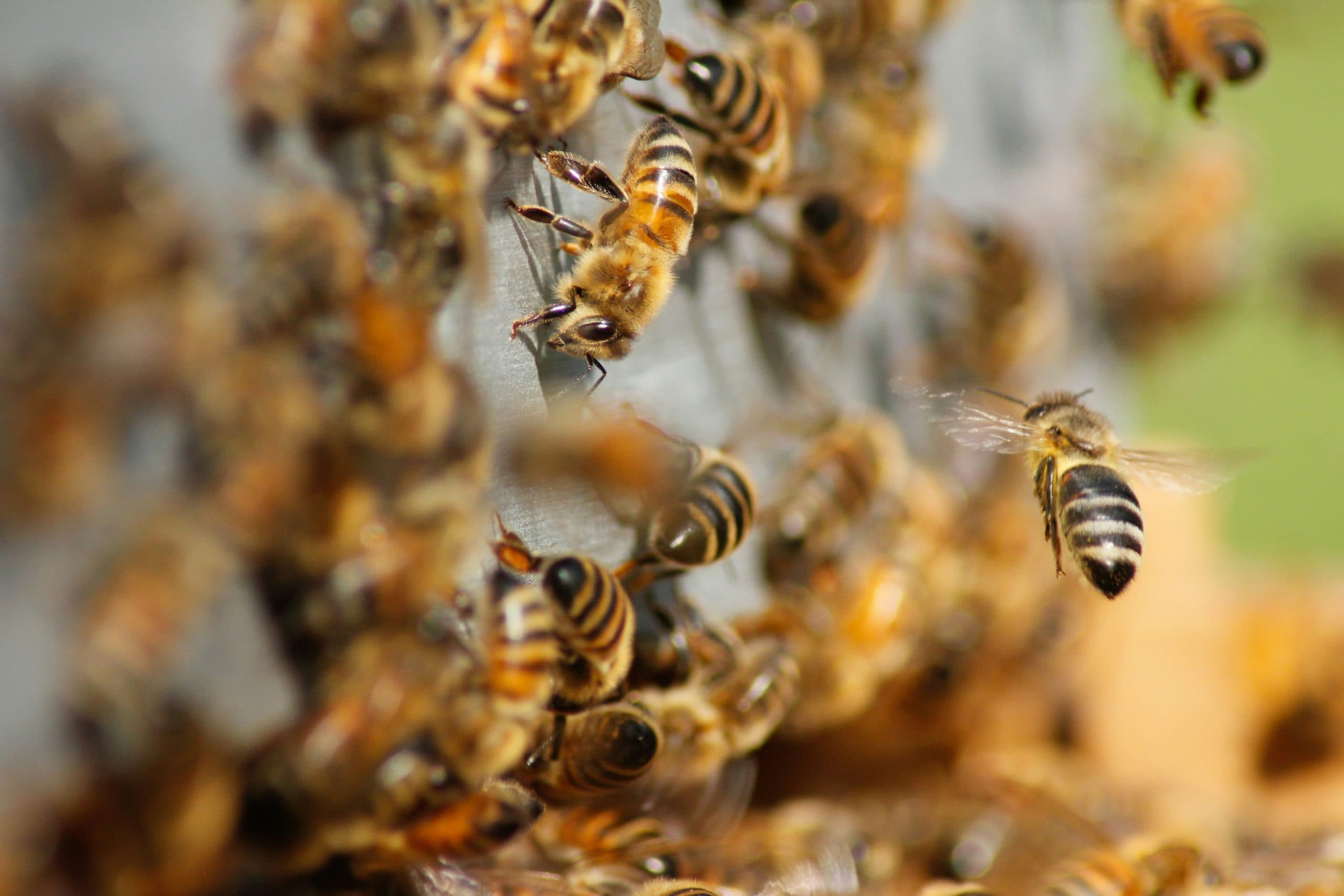
A honeybee colony can begin with a swarm. Hundreds or thousands of individuals leave the original colony together, settle temporarily and send scouts to look for a new home. If a suitable chimney or wall cavity is chosen, the swarm moves in and starts establishing a permanent colony.[4]
A bumblebee nest begins with one queen. After hibernation, she searches for a suitable nesting space and raises her first workers there. Bumblebee nests generally last around two to six months, depending on the species, weather and food availability. [5] [6]
That distinction matters. A temporary bumblebee nest behind a soffit and an established honeybee colony building comb inside a chimney may produce similar activity outside, but they are not the same property problem.
What Do Bees in a Wall Actually Mean?
Bees in wall spaces are usually noticed because insects keep disappearing into one small opening.
The entrance might be a mortar gap, a crack beside a window, a gap beneath cladding or another weakness in the outer wall. The visible hole does not necessarily contain the nest. It may simply lead into a much larger void.
This is particularly important with bees in wall cavity spaces. Honeybees may establish comb farther inside the structure, while bumblebees can use smaller enclosed areas. Solitary bees may use individual holes without sharing one colony.
The National Bee Unit notes that wild species may use cavities in buildings but generally form smaller, shorter-lived nesting groups than honeybees.[2]
You often find the doorway long before you find the nest.
Signs of Bees in Walls

The strongest signs of bees in walls come from repeated behaviour, not one insect.
Watch whether the insects consistently enter and leave the same opening. A single individual inspecting brickwork may simply be exploring. Regular two-way traffic through one point suggests that the space behind it is being used.
Buzzing from a wall or ceiling can support that suspicion, especially when it lines up with activity outside. Repeated appearances inside the same room can also matter, although one bee beside a window proves very little by itself.
With bees nesting in house walls, the pattern is more valuable than the raw number seen.
One entrance used again and again tells you much more than several insects scattered around the garden.
Bees in a Wall Cavity or Cavity Wall
A cavity wall provides protected space that cannot be seen from indoors, between the outer and inner parts of the building.
That is why searches such as bees in cavity wall, bees in house wall or bees in wall of house often describe the same basic problem. The insect is visible at the entrance, while the nest may sit farther along the void.
Do not assume the obvious opening should immediately be sealed. If an active colony is using it, blocking the normal route can leave the colony trapped within the structure and looking for another exit.
With an established honeybee colony, dealing only with the entrance also ignores any comb and stored honey inside. The BBKA advises that established colony removal should account for the colony, comb and honey rather than only the flying insects.[3]
If you are searching for Bees pest control Newcastle upon tyne near me because bees are disappearing into a wall, identification should therefore come before proofing. The small exterior gap may be only the first part of the route.
What Happens When Honeybees Settle Inside?
An established honeybee colony is different from a swarm that has stopped briefly on a branch.
An outdoor swarm may move on after a short stay while scouts search for somewhere permanent. Once honeybees have established themselves inside the fabric of a building, physical extraction and relocation may require specialist structural access. [1]
The BBKA makes an important distinction: volunteer swarm collectors generally deal with accessible honeybee swarms, not established colonies hidden inside buildings. A colony behind masonry or inside a chimney may need an experienced removal specialist, with the comb and honey considered as part of the work. [3]
For bees nest removal Newcastle upon tyne, this difference matters. Newcastle City Council does not treat bees and directs people with honeybee nests or swarms towards the British Beekeepers Association. [8]
An inaccessible colony inside the structure may therefore need a specialist assessment rather than standard swarm collection.
Why Bees Nest in Chimneys
A chimney can provide a large, protected vertical cavity with an obvious entrance high above regular household activity.
That makes bees in chimney spaces particularly relevant to honeybee swarms. National Bee Unit guidance identifies chimneys as one of the building locations in which feral honeybee colonies may establish themselves.[2]
The first clue may be outside. Repeated flight around the chimney pot or movement into one opening may be visible long before anything enters the room below. If the fireplace is unused, the colony may remain out of sight while comb develops higher in the flue.
A search for gateshead council bees nest currently leads to council advice explaining that Gateshead does not treat bees and recommends contacting the BBKA. Difficult locations such as chimneys may require help from a suitably experienced specialist. [9]
Assessing difficult nesting locations is part of the work carried out by our pest control team across homes and businesses in the North East.
Do Not Treat the Chimney Opening as the Whole Problem

The opening at the top is only the access point.
With honeybees, comb may already be attached inside the chimney. The BBKA advises that established colony removal should consider the wax, honey and colony because material left inside a building can cause further problems.[3]
That is why waiting until activity becomes less visible and then covering the chimney is not always enough. You first need to establish whether the activity involved temporary exploration, a short-lived wild-bee nest or a settled honeybee colony.
A quiet entrance does not tell you what has been built deeper inside the flue.
Why Bees Use Lofts and Roof Spaces
Bees in loft spaces are often using the roofline rather than entering through the room below.
Gaps around eaves, soffits and roof edges can lead into protected voids. Bumblebees, particularly tree bumblebees, readily use elevated nesting sites such as roof eaves and bird boxes. Honeybees can also establish themselves in larger building cavities if a swarm finds enough protected space.
Bumblebee Conservation Trust guidance explains that a tree bumblebee nest can sometimes have a cloud of around 20 males flying outside during summer. This can look dramatic, but it is mating behaviour rather than a honeybee swarm. The males cannot sting.[5]
For bees nest removal north tyneside, identification matters before assuming treatment is necessary. North Tyneside Council says it does not undertake bee treatments unless there is a risk to a person’s health and safety. [10]
Bees in Air Bricks
bees in air brick openings are not necessarily nesting inside the vent itself.
The opening can act as a doorway into a cavity behind it. Repeated entry and exit through the same section of the air brick suggests that the void deserves attention, but it still does not identify the species.
Solitary species may use small holes individually, while a bumblebee queen can choose a larger sheltered void. Honeybees can establish a much bigger colony if sufficient cavity space is available.
Blocking the vent based only on surface activity could therefore create the wrong response.
Trace where the air brick leads before deciding what the bee activity means.
Why Are Dead Bees Appearing in the House?
One of the easiest mistakes is treating every dead insect as proof of a colony inside the wall.
Bumblebee workers have relatively short lives. Dead adults and larvae may also be removed from an active nest by other workers, so finding one near an entrance does not necessarily mean the entire colony has died.[6]
If you are finding dead bees in house rooms repeatedly, pay attention to where they appear. Repeated findings beside the same window, fireplace or wall area are more significant than one isolated insect. Look for an exterior flight route on the corresponding part of the building.
One dead insect is an observation. Repeated activity in the same indoor location is a pattern worth tracing.
What Does a Swarm of Bees in the Garden Mean?

A swarm of bees in garden areas can look alarming because a genuine honeybee swarm may contain hundreds or thousands of insects.
The main UK swarm season normally runs from April to late July, with swarms particularly common during May and June. The cluster is often temporary while scouts search for a permanent cavity.[1][4]
This creates an important connection with building activity. A swarm clustered on a tree today and steady honeybee traffic entering a chimney tomorrow could be part of the same movement. The swarm was the colony in transit; the chimney may be the home it selected.
Bumblebees do not swarm in the same way. A cloud of bumblebees outside a roof or bird box can instead be male mating activity around an established nest. [5]
Why Bees Use Compost Bins and Decking
Bees in compost bin areas are not necessarily being attracted by the compost as food.
Bumblebee queens search for sheltered places in which to establish their nests. The Bumblebee Conservation Trust identifies compost heaps, abandoned rodent holes, spaces beneath sheds and areas under garden decking as potential nesting locations. [5]
The same logic applies to a bees nest under decking. The boards may cover a dry existing cavity or an abandoned rodent hole where a queen can establish her nest away from regular disturbance.
Sheltered garden spaces can attract birds and other wildlife too, particularly where gardens provide protected nesting or resting areas close to buildings.
For bees control south tyneside, an outdoor nest should therefore be approached as an identification and risk question first. A quiet bumblebee nest beneath decking away from regular foot traffic is different from activity beside a doorway or heavily used family seating area.
Are Several Bees Around a Roof Always a Swarm?
No.
Tree bumblebees provide one of the best examples of why behaviour must be interpreted properly. Males can gather in a cloud of around 20 insects outside a nest while waiting for new queens to emerge. This behaviour may continue for a couple of weeks and usually signals that the nest is approaching the end of its cycle. [5]
A honeybee swarm is very different. It normally involves hundreds or thousands of individuals clustering together as one relocating colony.
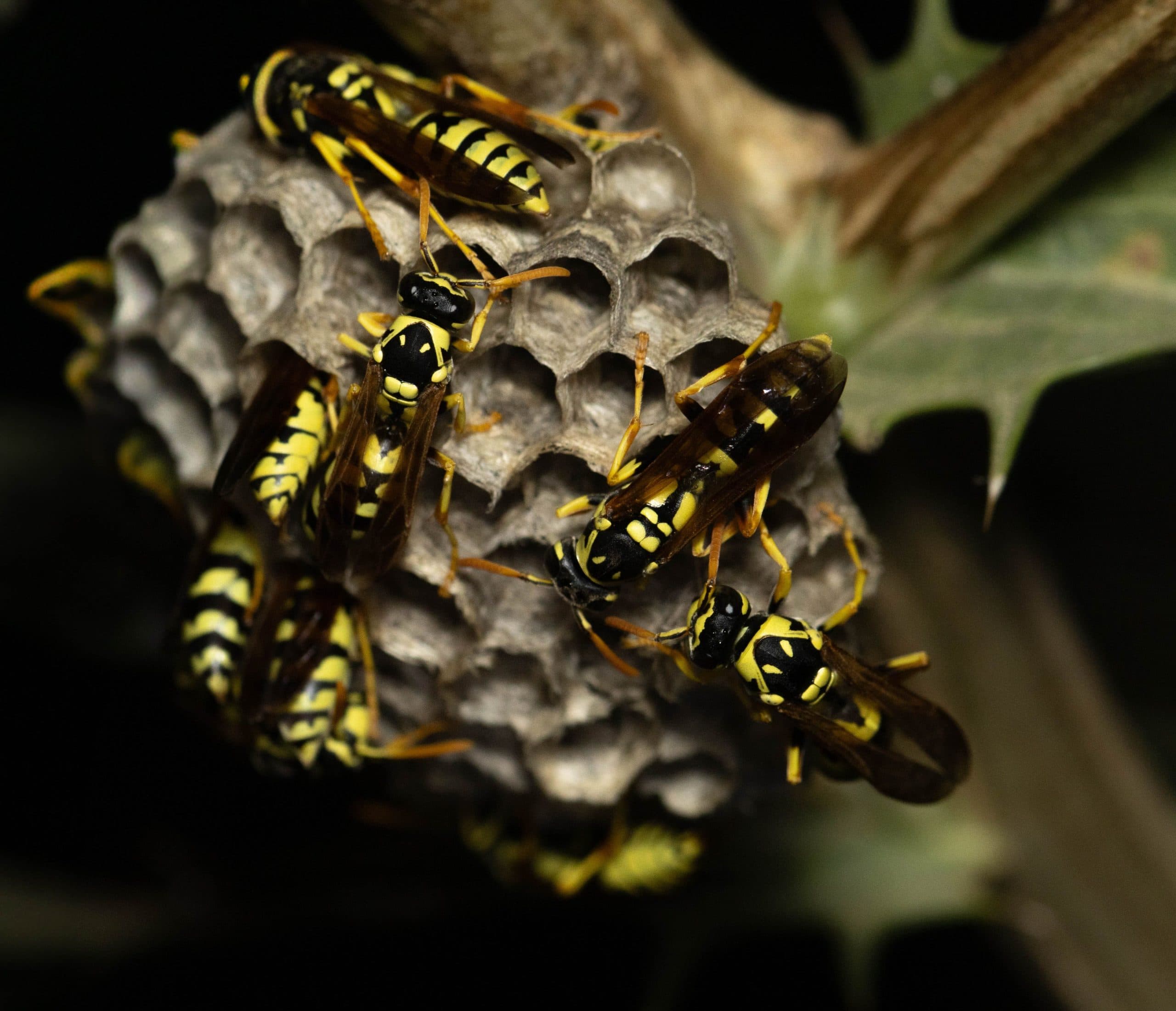
Other flying insects can create similar confusion around buildings, and wasps nesting near rooflines or openings may also produce repeated flight activity around one area.
If you are unsure which pattern you have, identifying the bee and watching its flight route will provide more useful information than the number of insects alone.
How Long Will Bees Stay in a Wall?
That depends heavily on the bee.
Bumblebee colonies are seasonal. Their nests usually last two to six months, and the old nest is not reused by the same colony once the cycle finishes. Another queen may choose the same general location in a later year, but she will start a new nest from scratch. [5]
Honeybees are different. A settled feral colony may remain established inside a building rather than disappearing after one short summer cycle. [2]
The useful question is therefore not simply, “How long have the bees been there?” It is:
Which bees are there, and what stage of nesting are they in?
Can Bees in a Wall Be Left Alone?

Sometimes, yes.
National Bee Unit guidance recommends leaving wild bees such as bumblebees and solitary bees alone where possible. Their populations are generally smaller than honeybee colonies, they tend to be docile and their nesting activity ends naturally. [2]
The Bumblebee Conservation Trust similarly recommends leaving bumblebee nests in place when they are not causing a genuine problem. These nests are temporary and do not cause structural damage to buildings. [5]
The right response also depends on the species, location and level of risk. Our guide to the types of bee nests found around homes explains how nests in houses, lofts and gardens differ and what UK guidance says about dealing with them.
The decision becomes different when the nest sits beside a doorway, bees are entering occupied rooms, someone faces a serious sting risk or an established honeybee colony has built comb inside the structure.
For a sunderland council bees nest enquiry, current council guidance confirms that Sunderland does not offer a service to treat bees and instead directs residents to the British Beekeepers Association. [11]
Why You Should Identify the Bee Before Closing the Gap
A small hole can make the solution look obvious.
It often is not.
Closing an entrance without understanding the nest can leave active bees inside the fabric of the house. With honeybees, sealing the opening does nothing about comb or honey already established behind the surface. With bumblebees, the nest may only have weeks left in its natural cycle and may not require intervention.
Clear Pest Control pest advice starts with identifying the bee, following its flight path and assessing the likely nesting cavity rather than assuming every wall entrance requires the same response.
When Hidden Bee Activity Needs Professional Help
Professional assessment becomes more useful when the activity is inside a chimney, wall or roof space that cannot be checked safely, when bees repeatedly enter occupied rooms or when a honeybee colony appears to have become established inside the building.
National Bee Unit guidance explains that live feral honeybee colonies can sometimes be physically extracted and relocated by specialist bee removers. BPCA also stresses that different bee species require different responses and that treatment should not be used casually.
Someone searching for Bees pest control near me Sunderland may therefore need identification and an assessment rather than automatic extermination.
Clear Pest Control bee control is available for homes and businesses where activity around walls, chimneys, roof spaces or other difficult areas must be properly identified before the next step is taken.
If you cannot safely identify where the activity is coming from, contact Clear Pest Control for advice on the next appropriate step.
FAQs
What Are the Main Signs of Bees in Walls?
Repeated bees entering and leaving the same wall gap are among the strongest clues.
Buzzing behind a wall, repeated indoor appearances and activity focused on one section of brickwork can support the suspicion. However, the exterior flight pattern is usually more useful than one isolated bee.
Can Bees Live in a Wall Cavity?
Yes.
Honeybees can establish feral colonies inside building cavities, while bumblebees may use smaller wall spaces for a seasonal nest. Solitary bees can also use individual holes without forming one shared colony.
Why Are Bees Going Into My Air Brick?
The air brick may provide access to a larger cavity behind the wall or floor.
Repeated use of the same opening tells you that the route is important, but the species must still be identified before assuming there is a large colony inside.
Why Are There Bees in My Chimney?
Honeybee swarms naturally search for sheltered cavities in which they can establish a new colony. Chimneys are one of the building locations that feral honeybees may use. [2]
The colony may be well above the fireplace even if activity is first noticed inside the room.
Do Bees Nest in Lofts?
Yes.
Bumblebees can use roof spaces and eaves, while honeybees may establish themselves in larger roof cavities where a swarm finds suitable space.
Does a Dead Bee in the House Mean There Is a Nest?
Not by itself.
Bumblebee workers naturally have short lifespans, and an isolated bee could have entered through an open window. Repeated dead or live bees appearing in the same part of the house give you more reason to trace the exterior route.
What Does a Swarm of Bees in the Garden Mean?
A genuine honeybee swarm is a relocating colony and can contain thousands of bees.
The cluster may remain temporarily while scout bees search for somewhere permanent, including suitable cavities in buildings. [4]
Why Are Bees Nesting in My Compost Bin?
Bumblebees may use protected spaces in or around compost heaps because queens search for sheltered nesting sites.
The compost itself is not necessarily attracting them as food.
Can Bees Nest Under Decking?
Yes.
Some bumblebee species nest underground in abandoned rodent holes and other sheltered spaces, including areas beneath sheds and garden decking.
Should You Block a Hole Being Used by Bees?
Not while you are unsure what is inside.
An active colony may search for another route. An established honeybee colony can also leave comb and honey inside the building even if the visible entrance is closed. [3]
Do Bumblebees Come Back to the Same Nest?
The same colony does not.
Bumblebee nests finish naturally and are not reused by that colony. However, another queen may choose the same suitable location during a future nesting season. [5]
Sources
[1] National Bee Unit — Dealing with Swarms
[2] National Bee Unit — Honey Bees in the UK
[3] British Beekeepers Association — Bees in Buildings
[4] British Beekeepers Association — Honey Bee Swarms
[5] Bumblebee Conservation Trust — Bumblebee Nests
[6] Bumblebee Conservation Trust — The Bumblebee Lifecycle
[7] British Pest Control Association — Pest Advice for Controlling Bees
[8] Newcastle City Council — Bees